In Stock & On Sale - Save up to $650 on your Wheel & Tire setup!

- Shop Parts
- Shop By Brand
- Shop by Generation
- About Us
- Resources & Tools


September 11, 2026
Four stages of nitrous on a roughly 300,000-mile, stock-bottom-end LB7 sounds like an expensive way to find out where the weak parts are. Jaxon Harrell has been finding out just how far that combination can go.
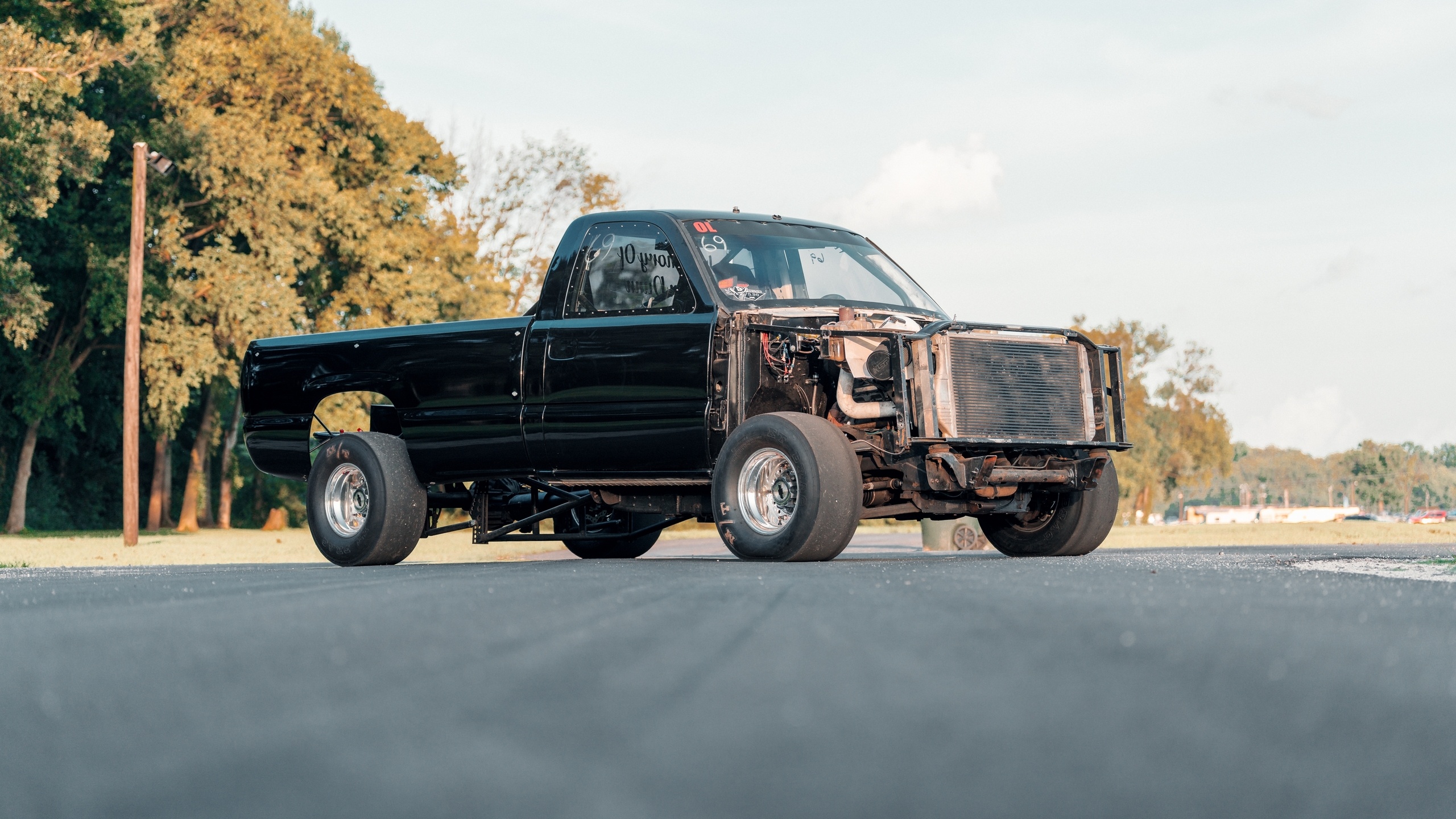
His 2001 Chevrolet Silverado has run 5.79 seconds in the eighth-mile and reached the 5.90 index final at the 2026 Bluegrass Truck Jam. It does that with a factory-spec LB7 turbo, no transbrake, and no staging limiter. At 23 when we caught up with him at Bluegrass, Jaxon had spent five years turning an $1,800 lawn-care truck into the fiberglass-bodied race truck you see here.
He estimates his investment at roughly $40,000. That buys a lot of truck parts, but it doesn’t account for all the nights he spent figuring out what to do with them.
The Silverado appeared on an Instagram sales page with a $2,000 asking price and blown head gaskets. Otherwise, Jaxon says, the body and interior were in excellent shape. It was a two-wheel-drive lawn-care truck with a useful life behind it and a very different one ahead.
He brought it home for at 18 years old, and by the end of the first day he was already stripping it to the frame to begin the four-wheel-drive conversion using mounts from a donor frame.
The ambition was there before the experience. At one point, two bare frames sat beside each other in the farm shop, with parts scattered outside. Jaxon remembers wondering whether he had taken on more than he could finish. People stopped by to look, and some had their doubts.
Within a few months, he says, the truck was back together and making 6.70-second passes. That was the original target, with the possibility of keeping it street legal. The 5.90 build developed later, as he kept removing weight and asking more of the truck.
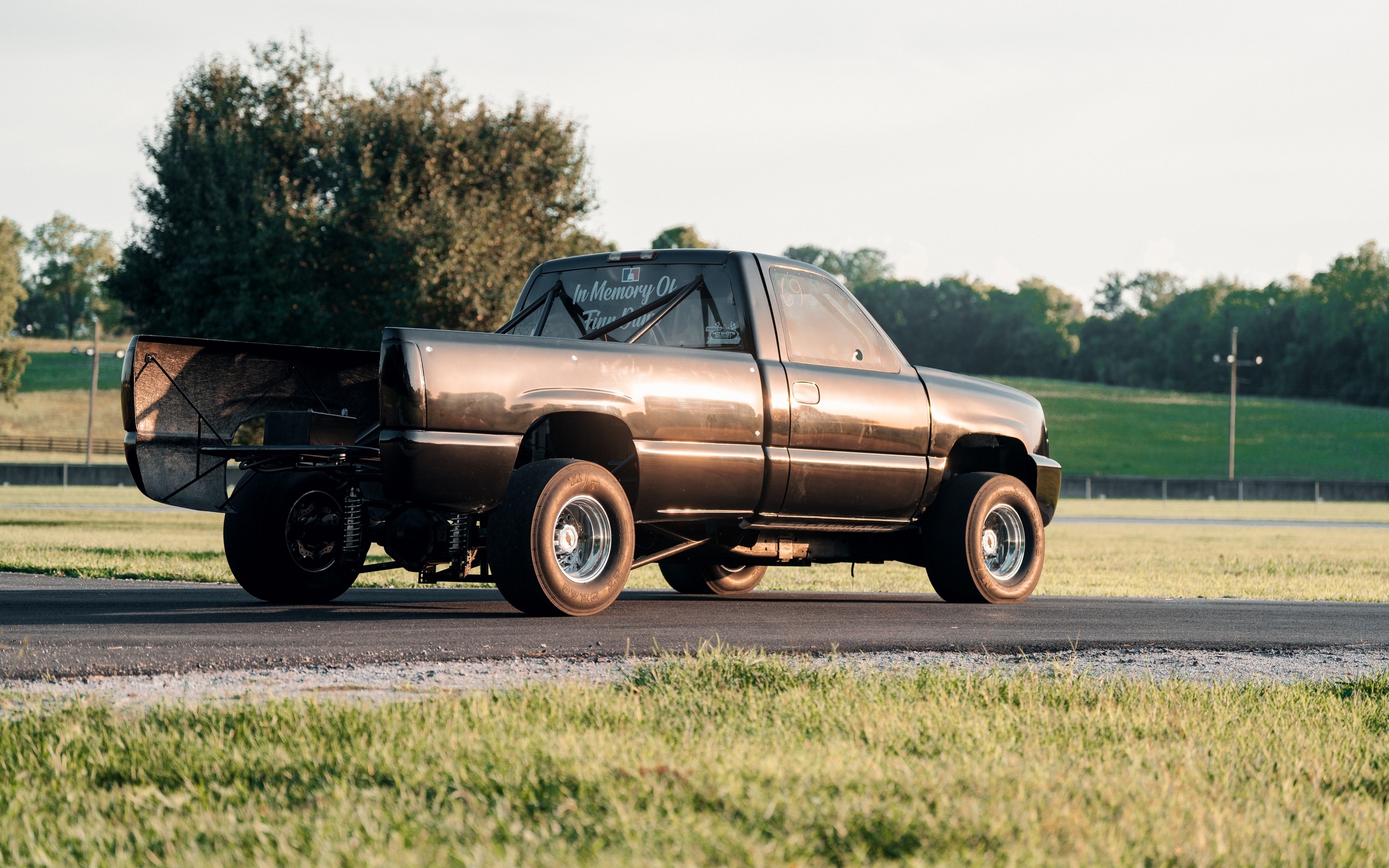
Jaxon’s wheel-and-tire choices followed the same practical approach as the rest of the project. The WELDs were affordable, accommodated the wide drag slicks he wanted to run, and worked for his combination.
The truck now sits on 15-inch WELD wheels with Mickey Thompson slicks. Making room for that package involved aftermarket hubs and brakes, with Wilwood equipment at both ends. Much of the independent front suspension remains, including the factory torsion bars, alongside QA1 shocks and a straight center link.
The rear required a larger commitment. Jaxon spent about a year considering a back-half and four-link conversion before having the work done. He had never worked with that kind of rear suspension, so understanding the setup became one of the most research-intensive parts of the build.
Scott Castelloe handled the frame modifications, while Jaxon installed the suspension components. QA1 rear springs and shocks are part of the finished arrangement.
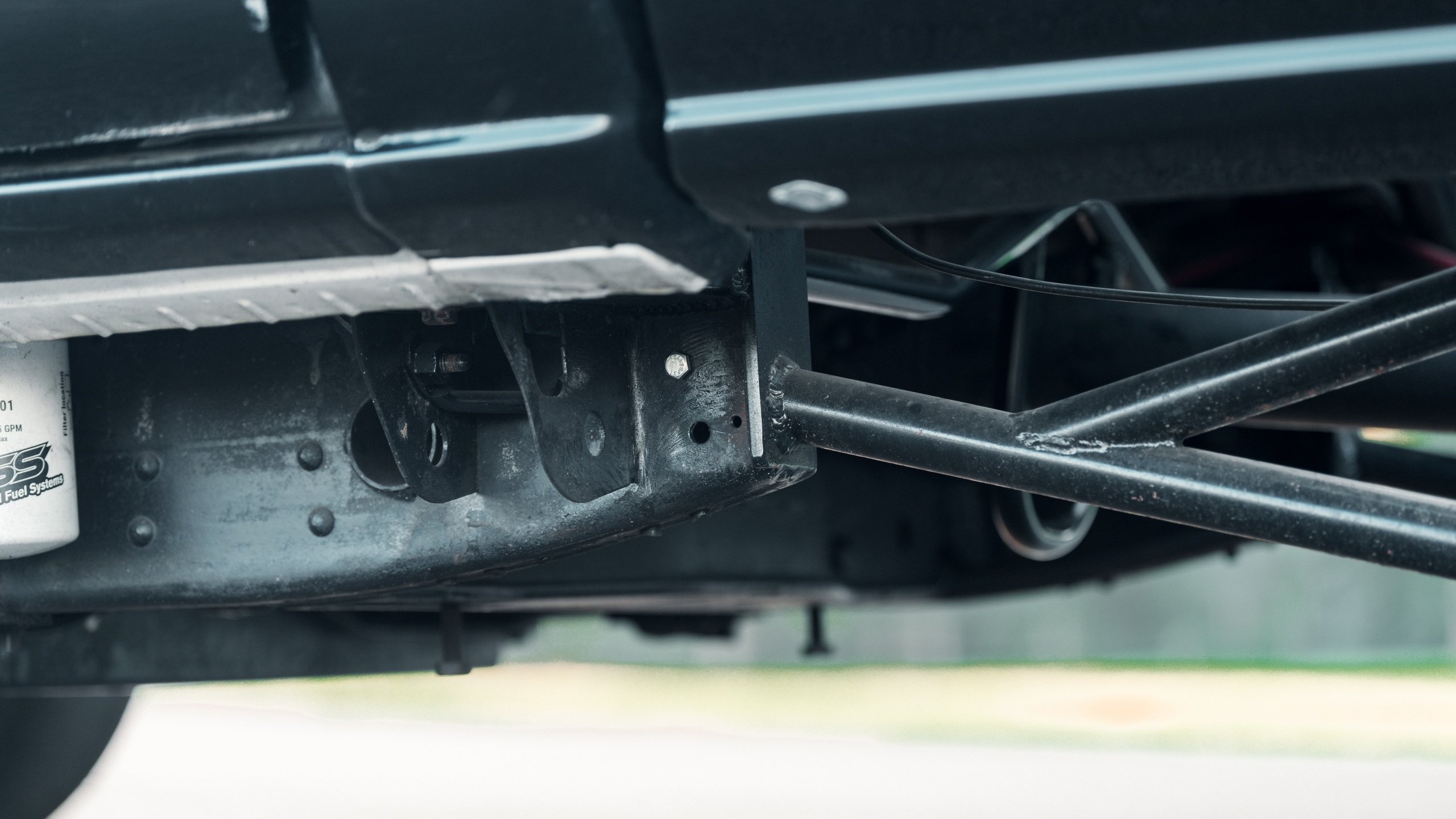
That context matters when looking at the truck’s stance. Its wheel-and-tire package sits within a chassis that has been extensively reworked for racing. The wheel diameter is only one piece of the combination; the hubs, brakes, suspension, and available space all belong in the conversation.
ART Fiberglass panels helped bring the truck down to an estimated 4,000 pounds. Stitchcount’s black wrap gives it a clean finish, while a five-gallon fuel cell replaces the original tank. Inside are a custom chromoly cage, an aluminum Kirkey seat, a Motion Raceworks steering wheel, and two nitrous bottles occupying the passenger side.
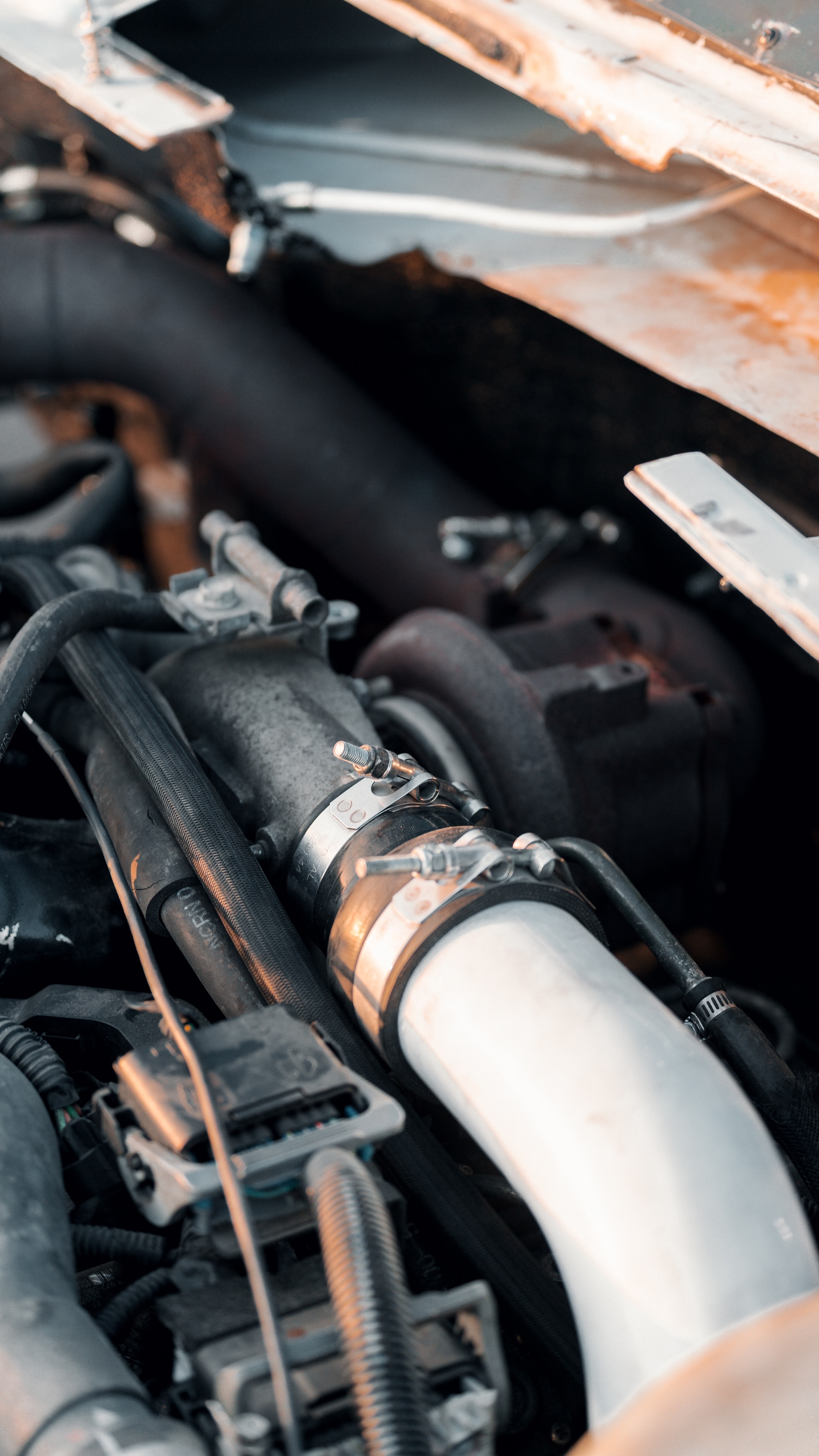
The engine is an LB7 from another truck, with approximately 300,000 miles reported on its factory bottom end. Its rods, pistons, crankshaft, and camshaft remain stock, along with the cylinder heads and exhaust manifolds.
The turbo is also a replacement factory unit. Jaxon has had failures, including wastegate-related trouble, but replacing the charger hasn’t meant moving to a larger one. He sees little reason to spend that money while the stock turbo is still helping the truck run the numbers he wants.
The supporting systems are a different story. S&S Diesel Motorsport 200-percent-over injectors and a 14mm pump supply the fuel. Four stages of nitrous, fed by the two bottles in the cab, come in on a timer early in the pass. HSP piping and a ProFab hood stack round out the combination.
Finding a setup the stock-bottom-end engine would tolerate was one of Jaxon’s biggest challenges. The development has included broken parts and changes along the way. What makes the combination interesting is how much performance he has extracted while retaining those factory components.
Transmission problems were a recurring obstacle. Jaxon says the Allison combinations he tried wouldn’t hold the power or shift the way he needed. Twisted Diesel supplied the 4L80 that helped him move past that problem, paired with a Precision torque converter.
The rest of the drivetrain includes an NP241 transfer case and 3.73 gearing front and rear. But the parts list only explains some of what happens on the starting line.
Jaxon stages and launches without a transbrake or staging limiter. Repeating that process falls heavily on his own timing and familiarity with the truck.
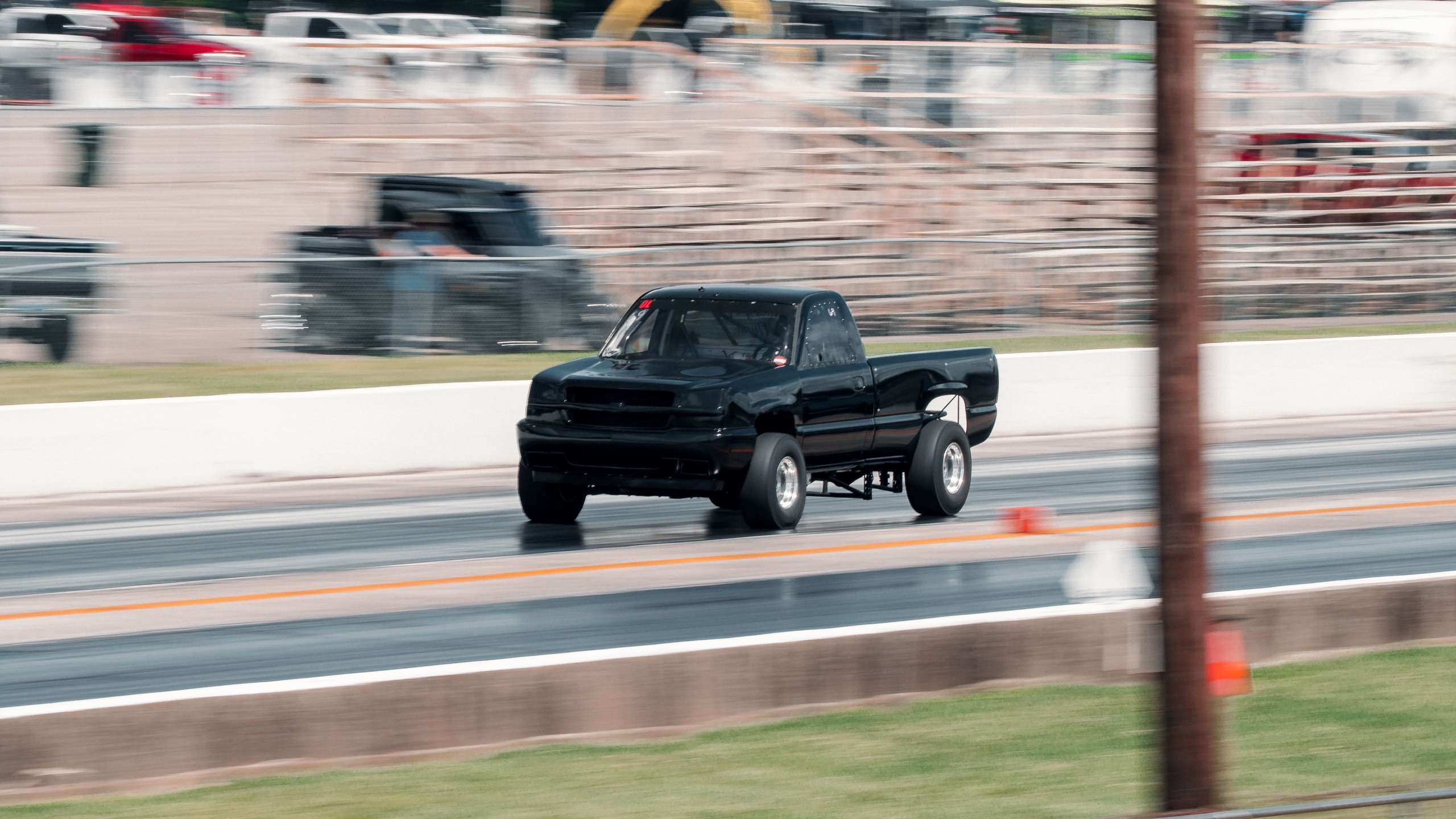
In 5.90 index racing, the target is a 5.90-second eighth-mile pass. Running quicker than the index can mean breaking out, so simply having the quickest truck doesn’t settle the race. The driver has to manage the launch and elapsed time as well as the competitor in the other lane.
Jaxon’s 5.79 at Diesel Truck Wars in 2025 showed the combination had performance beyond the index. At Bluegrass Truck Jam in 2026, he put together a run through eliminations that ended with a runner-up finish to Brianna Gilbert in her diesel-powered dragster.
For someone who started with two bare frames and a shop full of loose parts, reaching that final was a meaningful result.
Jaxon never started with a fixed budget. He hunted for inexpensive parts, often buying used through Marketplace, and changed the truck as his goals developed. His roughly $40,000 estimate reflects five years of that process.
Some costs surprised him. He says the body and appearance consumed more money than he expected, and that he has more invested in making the truck look good than making it perform. The fiberglass was still an upgrade he was glad to make, both for the weight reduction and the finished appearance.
The work also taught him where to commit. The rear suspension took research and outside help. The transmission needed a different approach. The engine and turbo have stayed factory-spec where he believes they still serve the goal.
He takes pride in how few people have worked on the truck, and in knowing it from the frame up. Asked what story it would tell, he described nights that stretched until sunrise and falling asleep on a creeper underneath it, thinking about what he could change next.
There may eventually be a built engine in its future. Jaxon sees more potential in the chassis and wants to find out what it can do.
After five years, a 5.79 pass, and a final-round appearance, he’s still looking underneath it for the next idea.
Jaxon chose his wheels and tires around the job he needed them to do. Your truck deserves the same consideration, whether it spends its time commuting, towing, or heading off-road.
Start with how you use it, your suspension and brake setup, and the fitment you want. Our wheel and tire fitment tools can help you compare sizes and wheel geometry. When you’re ready to narrow down your options, talk with Tire Wheel Experts about a setup that fits your truck and your budget.